


Dream interpretation
Dream interpretation is the art of exploring the symbols, themes, and emotions within your dreams to gain deeper insights into your subconscious mind.



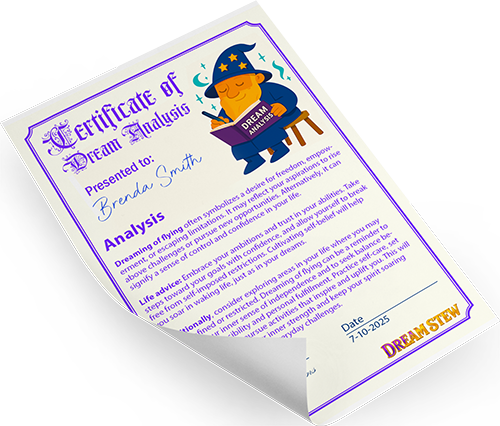
Register for a Dream Analysis and Interpretation and receive a certificate!
 Register for dream interpretation
Our AI-powered dream interpretation leverages advanced algorithms and a deep understanding of symbolic language to help you uncover the hidden meanings behind your dreams. Whether you’re curious about recurring motifs or seeking clarity on subconscious messages, our technology provides thoughtful, nuanced dream interpretations rooted in psychological principles and cultural symbolism. With a user-friendly interface and the ability to track your dream patterns over time, our AI dream interpretation is a valuable tool for exploring your inner world and gaining a deeper understanding of yourself.
After completing the dream analysis and interpretation you’ll receive a dream analysis and interpretation certificate that includes a personalized analysis which offers a meaningful and tangible way to deepen your self-awareness and understanding of your subconscious mind. The certificate provides a detailed exploration of your specific dreams, highlighting key symbols, themes, and emotional insights unique to your experiences. This personalized dream interpretation can serve as a guiding tool for identifying areas in your life that may need attention or healing. With this clarity, you can take targeted actions to improve your well-being.
Dream interpretation
Dream interpretation is an ancient and universal practice that seeks to understand the symbolic language of the subconscious mind. Throughout history, cultures across the globe have regarded dreams as meaningful messages or omens, often linked to divine insight, personal guidance, or future events. This tradition underscores the deeply rooted human fascination with the hidden messages our minds produce during sleep, viewing them as portals to deeper truths about ourselves and the world around us. Interpreting dreams involves deciphering symbols, emotions, and narratives that appear in the dream state, revealing insights that may remain obscured during waking consciousness.
One fundamental aspect of dream interpretation is recognizing the symbolic nature of images and scenarios that appear during sleep. Unlike literal representations, these symbols often carry layered meanings influenced by personal experiences, cultural background, and emotional states. For instance, a recurring image of water might symbolize emotional depth or purification in one person’s dream, while in another, it could represent chaos or uncertainty. Understanding these symbols requires careful attention to context and personal associations, making dream interpretation a highly individualized process that combines intuition, reflection, and sometimes, cultural knowledge.
Emotional tone plays a crucial role in understanding dreams. The feelings experienced during a dream often provide significant clues about its meaning. For example, feelings of fear or anxiety in a dream might point to unresolved conflicts or stressors in waking life, whereas feelings of joy or relief could suggest personal growth or acceptance. Analyzing the emotional responses associated with dream symbols helps to uncover underlying issues or desires that may not be fully acknowledged consciously. This emotional insight can serve as a catalyst for self-awareness and emotional healing, guiding individuals toward greater understanding of their inner worlds.
Dreams also frequently serve as a mirror reflecting current life circumstances and psychological states. They can highlight areas of tension, hope, fear, or aspiration that are influencing an individual’s subconscious. For example, someone experiencing significant life changes might dream of crossing bridges or climbing mountains, symbolizing transitions or challenges. Recognizing these patterns allows individuals to process their experiences more fully and gain perspective on their personal journeys. In this way, dreams become a valuable tool for self-reflection, offering a safe space to explore complex feelings and situations from a different vantage point.
Another important facet of dream interpretation involves understanding the recurring themes and motifs that appear over time. Recurrent dreams often point to persistent issues or unresolved conflicts that require attention. For example, consistently dreaming of being lost may suggest feelings of confusion or lack of direction in waking life, prompting introspection or decision-making. Tracking these recurring symbols and themes can help individuals identify patterns and triggers, facilitating targeted efforts toward personal growth or problem-solving. It emphasizes the importance of attentive listening to the messages that emerge repeatedly in our dreams.
Furthermore, dreams can be viewed as a creative space where the subconscious explores possibilities and alternative realities. They often present scenarios that challenge our perceptions and invite novel perspectives. This creative aspect of dreaming can inspire innovation, problem-solving, and emotional resilience. For instance, a dream about a solution to a complex problem may reflect the mind’s capacity for insight outside of conscious thought processes. Appreciating this creative dimension encourages a respectful and open-minded approach to dream interpretation, recognizing that even bizarre or surreal images contain meaningful, often transformative, messages.
In addition to personal symbolism, cultural and mythological references can enrich the understanding of dreams. Many societies assign specific meanings to certain symbols based on their mythologies, religious beliefs, or traditional stories. For example, a dream about a snake might symbolize transformation or danger, depending on cultural context. Exploring these cultural symbols can deepen interpretation by providing additional layers of meaning, connecting personal experiences with collective archetypes and shared human narratives. This cultural lens broadens the scope of understanding and underscores the interconnectedness of individual and collective consciousness.
The process of interpreting dreams also involves a degree of introspection and mindfulness. Creating a habit of journaling dreams immediately upon waking helps preserve details that might otherwise fade and allows for ongoing analysis. Reflecting on these entries over time can reveal patterns, shifts, and insights that contribute to personal growth. Developing a mindful attitude toward dreams fosters a respectful relationship with one’s inner life, encouraging curiosity rather than judgment. It transforms dream interpretation from a mystical or diagnostic activity into a meaningful practice of self-discovery and awareness.
Psychological states such as stress, anxiety, depression, or excitement often influence the content and frequency of dreams. Recognizing these connections can be instrumental in addressing mental health concerns. For example, persistent nightmares may indicate unresolved trauma or fears, while peaceful, restorative dreams might signal emotional balance. Using dreams as a mirror to our mental health enables individuals to notice subtle changes and seek appropriate support or self-care strategies. It emphasizes the importance of viewing dreams not only as messages but also as indicators of our overall psychological well-being.
Dreams can also function as a space for emotional processing and release. They provide a safe arena for confronting difficult feelings or memories that might be suppressed during waking hours. For instance, a dream that involves expressing anger or grief can facilitate catharsis and healing. Recognizing this therapeutic potential highlights the importance of approaching dreams with compassion and openness, rather than fear or skepticism. It underscores the idea that our dreams can serve as a compassionate guide, helping us to acknowledge and integrate complex emotional experiences.
Modern science suggests that dreams may play a role in memory consolidation, problem-solving, and emotional regulation. While the precise mechanisms are still being studied, it is widely acknowledged that dreaming contributes to cognitive and emotional health. Understanding dreams from this scientific perspective complements traditional interpretive approaches, reinforcing their value as tools for self-awareness and mental wellness. This integrated view fosters a holistic appreciation of dreams as both a biological necessity and a meaningful language of the mind.
Ultimately, the art of dream interpretation is a personal journey that combines curiosity, intuition, and reflection. It encourages individuals to pay attention to their inner narratives and symbols, fostering a deeper connection with their subconscious. By exploring dreams thoughtfully, people can uncover hidden truths, gain clarity, and nurture their emotional and spiritual development. It is a practice rooted in respect for the complexity of the human psyche and the recognition that each dream offers a unique opportunity for insight and growth. Whether viewed as a form of inner dialogue, creative exploration, or spiritual guidance, dreams remain a vital part of understanding ourselves and our place in the world.
AI dream interpretation
AI dream interpretation offers several notable advantages that can enhance the way individuals understand their subconscious messages. One of the primary benefits is the ability to process vast amounts of data rapidly and accurately. Unlike traditional methods that rely heavily on personal intuition or limited knowledge of symbolism, AI systems can analyze a wide range of symbols, themes, and emotional cues by comparing them against extensive databases of cultural, psychological, and literary references. This comprehensive analysis enables more nuanced and detailed interpretations, helping individuals uncover meanings they might not have considered on their own.
Another advantage of AI-driven dream interpretation is consistency and objectivity. Human interpretations can sometimes be influenced by personal biases, emotional states, or cultural backgrounds, leading to variability and potential inaccuracies. AI systems, however, apply standardized algorithms and criteria to interpret dreams, reducing the influence of subjective biases. This consistency ensures that users receive reliable insights that are based on established patterns and data, which can be particularly helpful for those seeking clear, evidence-based guidance or validation of their dream symbols.
AI technology also allows for personalization and ongoing learning. By continuously analyzing a user’s dreams over time, AI can identify recurring themes, emotional shifts, and evolving patterns specific to that individual. This personalized approach can lead to deeper insights into one’s psychological state, stressors, or personal growth trajectories. Moreover, as the AI system interacts with more users and accumulates a broader understanding of dream symbolism across diverse populations, it can refine its interpretations, making them more relevant and tailored to individual experiences and cultural contexts.
Furthermore, AI dream interpretation can serve as an accessible tool for a wide audience. Many people may not have the time, resources, or interest in consulting professional therapists or dream analysts. An AI platform provides an available, user-friendly interface where individuals can explore their dreams privately and conveniently at any time. This democratization of access encourages more people to engage with their inner worlds, fostering self-awareness and emotional well-being. It can also act as an educational resource, helping users learn about common symbols and themes, thereby enhancing their overall understanding of dream psychology.
Finally, AI-based interpretation can complement traditional methods by offering new perspectives and insights that might not be immediately apparent. It can suggest alternative interpretations, challenge preconceived notions, and open up different angles of understanding. For individuals seeking a fresh or broader view of their dreams, AI provides a valuable supplement to personal reflection or guidance from human experts. In doing so, it broadens the scope of dream analysis, making it a more dynamic and versatile tool for exploring the depths of the subconscious mind.
Using a dream journal for dream interpretation
Using a dream journal is a highly effective practice that can significantly enhance the process of dream interpretation. When individuals commit to recording their dreams immediately upon waking, they preserve details that might otherwise fade quickly from memory. Dreams are often fleeting, and without prompt documentation, many of their symbolic nuances, emotions, and specific images can be lost. A dedicated journal acts as a repository of these fleeting impressions, allowing for a more comprehensive review and analysis over time. This consistent recording creates a valuable archive that can reveal patterns, recurring themes, and symbols that might not be noticeable in individual dreams but become clear through ongoing reflection.
One of the key advantages of maintaining a dream journal is the increased self-awareness it fosters. As individuals review their entries regularly, they begin to notice emotional responses, recurring motifs, or particular symbols that appear repeatedly. These recurring elements often point to unresolved issues, ongoing concerns, or deep-seated desires. Recognizing such patterns can lead to profound insights about one’s subconscious mind, emotional needs, and life circumstances. Over time, this awareness can help people connect their dreams more meaningfully to their waking life, making the interpretive process more intuitive and insightful.
A dream journal also encourages a habit of mindfulness and attentiveness. By consciously engaging in the practice of recalling and writing about dreams, individuals cultivate a deeper connection to their inner experiences. This attentiveness can carry over into waking life, enhancing emotional regulation, clarity, and self-reflection. The act of journaling prompts individuals to slow down and pay close attention to their thoughts, feelings, and subconscious signals, fostering a holistic approach to understanding oneself. Such mindfulness can improve personal growth, emotional resilience, and the ability to interpret symbolic messages more accurately.
Additionally, a dream journal serves as a tool for tracking progress and change over time. As people record their dreams across weeks or months, they can observe shifts in themes, symbols, or emotional tones. These changes may correspond to life transitions, personal development, or emotional healing processes. Recognizing these transformations can provide reassurance and motivation, as well as a clearer understanding of how external events influence subconscious patterns. This longitudinal perspective allows individuals to see their inner journeys unfold, making dream interpretation a dynamic and evolving practice.
Lastly, keeping a dream journal encourages a personal and creative engagement with dream interpretation. It allows individuals to develop their own unique system of symbols and meanings, tailored to their experiences and cultural backgrounds. Over time, this personalized approach can deepen the connection between dreams and waking life, making interpretation more meaningful and relevant. It transforms dreams from mysterious, often confusing experiences into valuable sources of insight, guidance, and inspiration—empowering individuals to explore their inner worlds with curiosity and confidence.
Dream dictionary for dream interpretation
Using a dream dictionary can be a helpful starting point for those interested in exploring the meanings behind their dreams. A dream dictionary provides a comprehensive list of common symbols and their traditional dream interpretations, making it easier for individuals to identify possible messages conveyed during sleep. When someone encounters a particular symbol—such as a snake, a house, or flying—they can look it up in the dream dictionary to gain insight into what that element might represent. This approach offers a structured way to begin understanding the often complex and symbolic language of dreams, especially for beginners who are unfamiliar with dream symbolism.
One of the key advantages of using a dream dictionary is that it can serve as an educational tool, broadening one’s awareness of common symbols and their cultural or psychological associations. Many symbols tend to carry universally recognized meanings, such as water representing emotions or a storm indicating turmoil. By referencing a dream dictionary, individuals can familiarize themselves with these general dream interpretations and start to see connections between their dreams and their waking experiences. This process can spark curiosity and encourage deeper reflection on personal life circumstances that may relate to the symbols appearing in dreams.
However, it’s important to approach dream dictionaries with a degree of flexibility and caution. While they offer valuable insights, symbols often carry different meanings depending on personal context, cultural background, and current life situations. For example, a house might symbolize security for one person but represent isolation for another. Therefore, a dream dictionary should be used as a guide rather than a definitive answer in dream interpretation. Personal intuition and feelings about the symbols are crucial for accurate dream interpretation. Combining dictionary insights with personal reflection can lead to a more meaningful understanding of one’s dreams.
Another benefit of using a dream dictionary is that it can help individuals identify recurring symbols and themes across multiple dreams. Recognizing patterns can point to underlying issues or ongoing concerns that might not be immediately obvious. For instance, consistently dreaming about being lost or trapped might indicate feelings of confusion or being stuck in a particular area of life. By consulting a dream dictionary, individuals can explore various possible meanings of these recurring symbols, which can then inform their approach to resolving emotional conflicts or making positive changes.
Lastly, a dream dictionary can serve as a springboard for further dream interpretation and personal growth. Once certain symbols resonate or evoke insights, individuals can delve deeper into their personal associations with those symbols through journaling, meditation, or discussion with others. Over time, this process can help build a personalized understanding of dreams, integrating universal symbols with unique life experiences. In this way, a dream dictionary is a valuable tool—supporting initial curiosity, guiding dream interpretation, and inspiring ongoing self-discovery.
Dream interpretation for nightmares
Dream interpretation for nightmares can be a powerful tool for understanding underlying fears, anxieties, or unresolved conflicts that manifest during sleep. Nightmares often serve as the mind’s way of processing intense emotions or stressful life experiences that may be difficult to confront consciously. By examining the symbols, scenarios, and feelings present in a nightmare, individuals can gain insight into what aspects of their waking life might be causing distress or discomfort. For example, recurring nightmares about being chased or trapped may symbolize feelings of being overwhelmed or avoiding a particular issue, prompting the individual to explore these themes more deeply in their waking life.
Interpreting nightmares involves paying close attention to the emotional tone experienced during the dream. Feelings of fear, helplessness, or terror are common in nightmares and can reveal areas where a person feels vulnerable or insecure. Analyzing the specific symbols or characters involved—such as a threatening figure or dangerous environment—can also help identify what the nightmare might be representing. For instance, a menacing figure might symbolize a real-life source of stress or a person who evokes fear or anger. Recognizing these connections allows individuals to address the root causes of their anxiety, whether through emotional processing, problem-solving, or seeking support.
Often, nightmares are linked to unresolved trauma or lingering emotional wounds. In such cases, dream interpretation can serve as a step toward healing. Understanding what specific themes or symbols in the nightmare evoke distress can help individuals confront and work through these difficult feelings in a safe and controlled manner. Techniques such as guided imagery, journaling, or therapy can complement the interpretive process, providing a space to explore and reframe the fears that appear in nightmares. Sometimes, simply acknowledging and understanding the underlying causes can diminish the frequency or intensity of these distressing dreams over time.
It is also important to recognize that nightmares can sometimes serve a protective or warning function. They may alert us to issues that need attention or signal internal conflicts that require resolution. For example, a nightmare about losing a loved one might reflect fears of separation or change, prompting reflection on emotional attachments or life transitions. The thoughtful use of dream interpretation can help individuals become more aware of their subconscious concerns and encourage proactive steps toward addressing them. This perspective emphasizes that nightmares, while frightening, can ultimately be gateways to self-awareness and growth.
Finally, transforming the interpretation of nightmares involves cultivating a sense of agency and empowerment. Techniques such as lucid dreaming or guided visualization can help individuals regain control within their dreams, reducing fear and fostering a sense of mastery over distressing scenarios. By consciously engaging with the symbolic messages of nightmares, people can reframe their fears, find meaning, and even turn nightmares into opportunities for personal insight. This process not only alleviates fear but also supports overall emotional resilience, turning a typically negative experience into a meaningful step toward understanding oneself more deeply.