
Dreams
Dreams are often considered a mirror of our innermost selves, revealing aspects of our personality, desires, and fears that we may not fully acknowledge in waking life. They serve as a fascinating intersection between consciousness and subconsciousness, providing a space where the boundaries of reality blur and the mind explores limitless possibilities. This exploratory nature of dreaming allows for creative expression, emotional processing, and psychological healing, often operating beyond the constraints of logic and societal norms. Many psychologists and neuroscientists believe that by paying attention to our dreams and attempting to interpret their symbolism, we can gain valuable insights into our true selves, uncover hidden conflicts, or find inspiration.

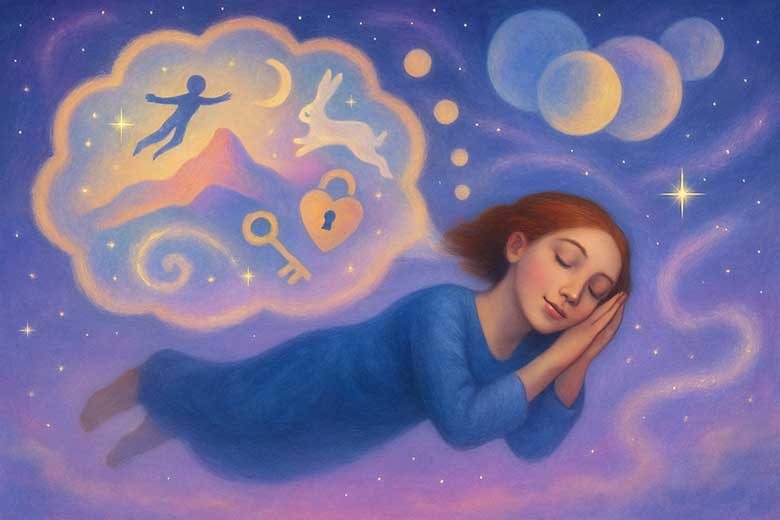
Dreams
Dreams have captivated human imagination for millennia, serving as a mysterious window into the subconscious mind. They often appear during the rapid eye movement (REM) stage of sleep, a phase characterized by heightened brain activity similar to wakefulness. Throughout history, cultures have ascribed various meanings to dreams—some viewing them as divine messages, others as reflections of inner fears and desires. Modern psychology continues to explore their significance, considering dreams as vital for emotional regulation, problem-solving, and memory consolidation. Despite extensive research, the precise purpose and origins of dreams remain elusive, fueling ongoing scientific inquiry and philosophical debate.
The content of dreams varies widely among individuals and even from night to night. Some dreams are vivid and emotionally charged, featuring familiar faces, fantastical landscapes, or surreal scenarios that defy logic. Others are mundane, reflecting everyday concerns or routines. Certain dreams are recurring, hinting at unresolved conflicts or persistent worries, while others are one-time experiences that leave a lasting impression. The symbolism within dreams often intrigues both psychologists and laypeople, prompting interpretations that attempt to uncover hidden meanings behind seemingly random images. This diversity underscores the complex relationship between our subconscious thoughts and conscious awareness.
One of the most intriguing aspects of dreams is their ability to simulate real-life experiences, sometimes with startling clarity. People often report feeling genuine emotions—fear, joy, anxiety—within their dreams, despite knowing that the scenarios are fabricated. This emotional intensity suggests that dreams serve an important function in processing feelings that may be suppressed or difficult to confront during waking hours. Moreover, dreams can inspire creativity and problem-solving; many artists, writers, and inventors have credited their dreams with sparking innovative ideas or solutions to complex issues. The neural mechanisms that allow the brain to generate such immersive experiences continue to be a subject of scientific fascination.
The phenomenon of lucid dreaming further complicates our understanding of dreams. In lucid dreams, the dreamer becomes aware that they are dreaming and may even exert control over their actions or the dream’s narrative. This awareness opens up possibilities for therapeutic applications, such as overcoming nightmares or exploring personal fears in a safe, controlled environment. Researchers are investigating how lucid dreaming can be harnessed for mental health benefits, as well as understanding the cognitive processes that enable self-awareness within dreams. The study of lucid dreams blurs the line between waking consciousness and the dream state, challenging traditional notions of reality.
Cultural interpretations of dreams have historically played a significant role in shaping societies. In ancient Egypt, dreams were considered messages from the divine, and dream interpreters held esteemed positions. In Native American traditions, dreams were seen as a way to communicate with spirits and ancestors. In Islamic tradition, dreams are categorized into different types, with some regarded as divine revelations. Across cultures, common themes—such as flying, falling, or being chased—appear frequently, suggesting universal symbols that resonate across human experience. These cultural beliefs influence how individuals perceive and remember their dreams, often guiding their actions or decisions based on dream interpretations.
The psychological theories of dreams have evolved over time revealing hidden desires and repressed thoughts. Archetypes and collective symbols appear in dreams across different cultures. Conversely, more contemporary theories, such as the activation-synthesis hypothesis, suggest that dreams result from the brain’s attempt to make sense of random neural activity during sleep. Others view dreams as a form of memory processing, helping to integrate new information and discard irrelevant data. Despite differing perspectives, most agree that dreams serve important functions related to mental health and cognitive processes.
The scientific study of dreams has advanced significantly with the advent of technology like functional magnetic resonance imaging (fMRI) and electroencephalography (EEG). These tools allow researchers to observe brain activity during various sleep stages, correlating specific patterns with dream content. For instance, increased activity in visual and emotional areas often accompanies vivid dreams, while prefrontal cortex activity tends to diminish, explaining the often illogical and fantastical nature of dreams. Such research has helped confirm that dreams are not random but are intricately linked to our emotional states, memories, and cognitive functions. Yet, capturing the exact content of dreams remains challenging, as they are inherently subjective experiences.
Nightmares, a distressing form of dreaming, can significantly impact mental health and sleep quality. Recurrent nightmares are common in conditions like post-traumatic stress disorder (PTSD)), where vivid, frightening dreams replay traumatic events. Treatments such as imagery rehearsal therapy aim to modify the content of nightmares, reducing their frequency and emotional impact. Understanding the triggers and mechanisms behind nightmares can shed light on how trauma and stress influence the subconscious mind. Conversely, some individuals experience pleasant or inspiring dreams that foster motivation and positive emotions, highlighting the dual nature of dreaming as both a source of distress and comfort.
Sleep disorders related to dreaming, such as REM sleep behavior disorder (RBD), reveal how the normal paralysis during REM sleep can sometimes malfunction. In RBD, individuals physically act out their dreams, sometimes violently, leading to injuries. Studying such disorders helps scientists understand the neurobiological pathways involved in controlling muscle paralysis during REM sleep. Additionally, parasomnias—abnormal behaviors during sleep—offer insights into the complex neural mechanisms governing our dreams and consciousness. These conditions underscore the importance of healthy sleep patterns for mental and physical well-being.
The relationship between dreams and memory consolidation is a prominent area of research. During sleep, particularly REM sleep, the brain appears to replay and organize memories, strengthening important connections while pruning irrelevant ones. Dreams often incorporate fragments of recent experiences, suggesting that they are part of this processing system. Some studies indicate that people who remember their dreams tend to perform better on tasks involving memory and creativity. This connection emphasizes that dreams are not merely random images but integral to our cognitive functioning, helping us learn, adapt, and integrate new information into our worldview.
The emotional tone of dreams can have lasting effects upon waking. Positive dreams can uplift mood and foster feelings of happiness and hope, while negative dreams or nightmares may cause distress or anxiety. Interestingly, dreams can also serve as a form of emotional catharsis, allowing individuals to confront fears or unresolved issues in a safe mental space. Therapeutic techniques like dream analysis aim to harness this potential, helping individuals gain insight into their emotional states and work through psychological conflicts. The intricate interplay between dreams and waking emotions underscores their importance in psychological health and personal growth.
As science and technology continue to evolve, so too will our understanding of dreams. Future research may unlock the mysteries of their neural basis, purpose, and influence on our waking lives. Virtual reality and artificial intelligence could eventually enable us to explore or even shape our dreams intentionally. Some speculate that dreams could serve as a platform for virtual experiences or therapy, allowing us to confront fears, rehearse scenarios, or foster creativity in unprecedented ways. Ultimately, dreams remain one of the most profound and enigmatic aspects of human consciousness, reflecting the complexity of our minds and the depths of our inner worlds.